
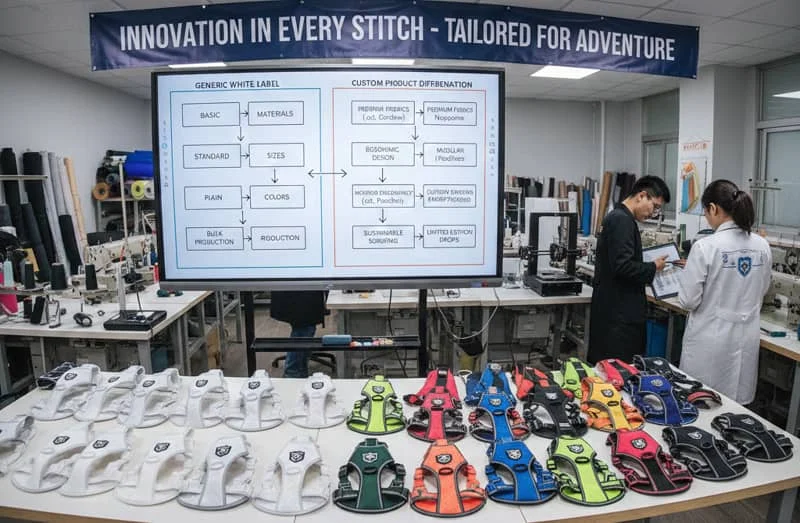
Hi there! I’m Jessica, the founder of Bestone. After spending 16 years in the pet product manufacturing industry, I have seen hundreds of brands come and go. The biggest challenge they face isn't just making a product—it is standing out in a crowded room. Today, the market is flooded with identical collars, leashes, and toys. If you want to survive and thrive, you need a plan to escape the "copy-paste" trap.
Before we dive deep, here is a quick "cheat sheet" of the most valuable data you need to know about the market right now. These numbers explain why sticking to generic products is dangerous and where the real opportunity lies.
Key Industrial Benchmarks: Pet Market Snapshot (2025)
| Metric | Data Point | Why It Matters For Your Brand |
|---|---|---|
| Global Pet Care Market Size | Over $300 Billion USD | The pie is huge, but competition is fierce. You are fighting for a slice of a massive industry. |
| Projected Annual Growth | Approx. 7% per year | The market is still expanding. New pet parents are entering the market every day. |
| Private-Label Growth (2024) | 5.8% increase in sales | Generic store brands are winning on price. You cannot beat them just by being cheaper. |
| DTC (Direct-to-Consumer) Growth | 20%+ Annual Growth | Selling directly to fans is the fastest way to grow, but you need a unique story to do it. |
| OEM Market Value (2025) | ~$49.5 Billion USD | Factories are busy. But are they making your unique product, or the same thing for everyone? |
Insight: White-label or generic OEM products often lead to limited product differentiation — multiple sellers may offer the same product under different names, resulting in commoditization and price-based competition rather than value-based competition.
The OEM Trap: Why Most Pet Brands Look the Same
Have you ever searched for a "no-pull dog harness" online and felt like you were seeing the same photo over and over again? That is the OEM (Original Equipment Manufacturer) trap. Many new entrepreneurs start by finding a supplier who has a catalog of ready-made products. They pick a color, add a logo, and list it for sale. This is called "white-labeling."
While this is an easy way to start, it is a hard way to grow. When you sell the exact same harness as ten other companies, you are selling a commodity. This means customers will only buy from you if you are the cheapest option. This "race to the bottom" destroys your profit margins. If you are starting a pet products online store, you need to think about longevity.
Big retailers and platforms (like Amazon or Temu) love this. They can source the same generic product cheaper than you can. Suddenly, your brand has no power. You are just another seller with a logo on a generic bag. To build a real global brand, you must shift your mindset. You are not just buying products; you should be creating solutions.
Because of that, maintaining a white-label model makes it difficult for a brand to establish a unique identity, build consumer loyalty, or control quality consistently. You need to move from "picking products" to "designing outcomes."
Explore o nosso equipamento completo para cães
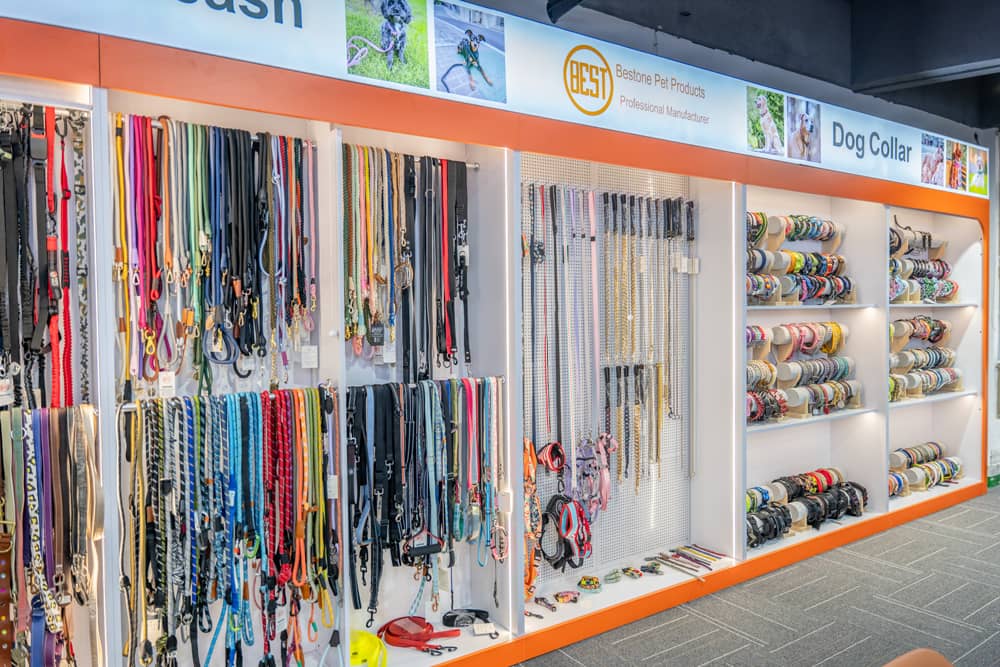
Linha de produtos
Desde coleiras ecológicas a arneses, trelas e vestuário - tem totalmente personalizado produtos para cães com logótipo, cor, tecido e embalagem adaptados à sua marca.
Pronto para OEM/ODM. Qualidade, entrega, escalabilidade-Bestone cumpre.
Why Private-Label Growth Is a Warning Sign for Emerging Brands
The rise of private-label products is a massive red flag for small brands. Private-label products are the "store brands" owned by big retailers (like Walmart's vibrant life or Amazon Basics). In the past, these were seen as cheap or low quality. That has changed.
How Big Is the Market Shift?
The OEM and private-label segment is expected to reach nearly $50 billion by 2025. This means retailers are pouring money into making their own versions of popular products. If your product is simple and easy to copy, a retailer will eventually make their own version and sell it for 20% less. They have the shelf space and the customer data. You cannot win a price war against them.
Expert Insight: McKinsey observes that private brands have shifted from being purely price-focused to acting as strategic growth platforms that require clear value propositions, differentiators, and stronger merchandising and branding capabilities, not just low cost.
The Consumer Mindset Change
Shoppers are smart. When inflation hits, they look for value. Data shows that many consumers are "trading down" to private labels for basic items. However, they are still willing to pay extra for products that offer real health or safety benefits. If your brand looks just like the store brand, they will buy the cheaper one. But if your brand solves a specific problem—like anxiety relief or extreme durability—they will stick with you.
This is why you must understand trends. For example, knowing dog apparel trends for 2025 or why specific materials matter can save your business from becoming obsolete.
The Brand-Building Playbook: 6 Steps to Escape the Commodity Trap
So, how do you escape? You need a playbook that focuses on differentiation. Here are six steps to turn a generic business into a beloved brand.
Step 1: Choose a Defensible Niche
Do not try to sell everything for everyone. The "general pet store" model is dead for small brands. Instead, pick a specific lane. Are you the brand for "eco-conscious city dogs"? Are you the "heavy-duty gear for hiking dogs" brand?
By narrowing your focus, you can become the expert in that space. For example, if you focus on camping, you can offer specialized equipamento essencial de campismo para cães. This makes your marketing sharper and your customer base more loyal.
Step 2: Turn OEM Capacity into Real Product Innovation
This is where a good manufacturing partner helps. Instead of picking a product off the shelf, use ODM (Original Design Manufacturing) services. This means you work with the factory to change the design. Maybe you add a special handle, use a new cooling fabric, or change the buckle mechanism.
At Bestone, we see clients succeed when they ask for unique modifications. It doesn't always require expensive new molds. Sometimes, combining different materials—like neoprene for comfort—can create a best-seller. Learn why neoprene dog harnesses are a top seller and how you can tweak them to be unique.
"O design que privilegia a funcionalidade está a dominar as tendências de acessórios para animais de estimação em 2025.' - Angela Murray, CEO da PawsMatter
Step 3: Design for Pet-Parent Outcomes, Not Just SKUs
Stop thinking about "products" and start thinking about "outcomes." What problem does the pet parent have?
- Problem: "My dog pulls my arm off on walks." -> Solution: A scientifically designed no-pull harness.
- Problem: "I worry about my dog at night." -> Solution: High-visibility LED gear.
- Problem: "My dog gets cold but hates heavy coats." -> Solution: Lightweight thermal tech vests.
When you market the solution, you are no longer competing on price. You are selling peace of mind.
Descubra o seu parceiro de fabrico fiável
Bestone tem 16 anos de experiência em I&D e exportação de produtos para cães, com controlo de qualidade certificado pela SGS/TUV/CE, fábrica amiga do ambiente, e poupança de custos 40-60%.
Parceiro consigo para elevar a linha de produtos para animais de estimação da sua marca sem problemas.
Step 4: Build a Direct-to-Consumer (DTC) Engine
The fastest-growing brands are DTC. Why? Because you own the customer data. When you sell on Amazon, Amazon owns the customer. When you sell on your own site, you can talk to them, email them, and build a community.
Start with a "Hero Product"—one amazing item that gets people in the door. Maybe it is a customized private label harness set. Once they buy that, you can sell them accessories, toys, and refills. This increases the lifetime value of every customer.
Step 5: Use Quality and Transparency as Brand Moats
In a world of cheap knock-offs, quality is your best defense. Be transparent about your materials. If you use organic cotton or recycled polyester, shout about it! Consumers today care about sustainability. Using RPET and organic cotton in pet fashion sets you apart from the plastic-heavy competitors.
Also, educate your customers. Write guides on how to distinguish dog clothing fabrics. When you prove you know your stuff, customers trust you more.
Step 6: Scale Global Distribution Without Losing Brand Control
Once you have a great brand, you need to scale. But be careful. If you sell to every distributor, your brand might get diluted. Choose partners carefully.
Look for markets where US and European trends are catching on. And do not forget logistics. Understanding things like US import tariffs and cost reduction is vital for keeping your global pricing competitive.
How Bestone-Type OEM Partners Help Brands Escape Pure Price Competition
You might wonder, "If OEM is a trap, why use a manufacturer like Bestone?" The answer lies in how you use us. We are not just a factory; we are a development partner.
With 16 years of experience, we help brands move from "white label" to "custom design." We have the technology to do rapid prototyping, meaning we can take your sketch and turn it into a sample in days. We also offer access to eco-friendly supply chains that smaller factories cannot provide.
Trend Watch: A 2024 pet supplies trend article notes that as Gen Z becomes a larger share of pet owners, demand for personalized and customized products is rising sharply in subcategories like pet toys, decorations, and clothing.
We enable you to offer that personalization. Whether it is a custom buckle for a arnês tático or a specific fabric pattern for a raincoat, we handle the complexity so you can focus on marketing.
Perguntas mais frequentes
Here are some common questions we get from brand owners trying to navigate this landscape.
1. What is the difference between OEM and white-label in pet products?
OEM (Original Equipment Manufacturer) usually means the factory makes a product according to your specific design and specs. White-label means the factory makes a generic product, and you just put your sticker on it. OEM allows for uniqueness; white-label does not.
2. Why do so many pet brands rely on OEM manufacturing?
It lowers the barrier to entry. Building your own factory is expensive and risky. OEM allows brands to launch quickly with lower capital. The key is to use OEM for custom products, not generic ones.
3. How can a pet brand stand out if products come from the same factory?
By owning the "Brief." Even if we use the same machines, your design, material choice, and features can be totally different. Also, your brand story, customer service, and packaging experience play a huge role in standing out.
4. Is private-label pet food and supplies really a threat to established brands?
Yes, absolutely. If your brand does not offer a clear benefit over the store brand, customers will switch to save money. You must give them a reason to stay—like better performance, better ethics, or better style.
Conclusion: Build a Brand, Not Just a Business
The pet industry is growing, but it is also changing. The days of easy money from generic white-label products are ending. To succeed in 2025 and beyond, you must build a real brand. This means choosing a niche, innovating your product, and connecting directly with pet parents.
It requires effort, but the rewards are massive. You are not just selling a leash; you are selling a better walk with a best friend. That is a value proposition that no generic competitor can steal.
If you are ready to stop copying and start creating, you need a manufacturing partner who understands your vision. At Bestone, we specialize in helping brands make that leap. From custom molds to sustainable materials, we are here to help you build a product line that is truly yours.
Ready to build a defensible global brand? Contact Bestone today to discuss your custom product needs.
References & Further Reading:

 English
  العربية
  Dansk
Dansk  Nederlands
  Français
  Italiano
  한국어
한국어  Norsk bokmål
  Português
  Русский
  Српски језик
  Español
  Svenska
  日本語
日本語  Deutsch