
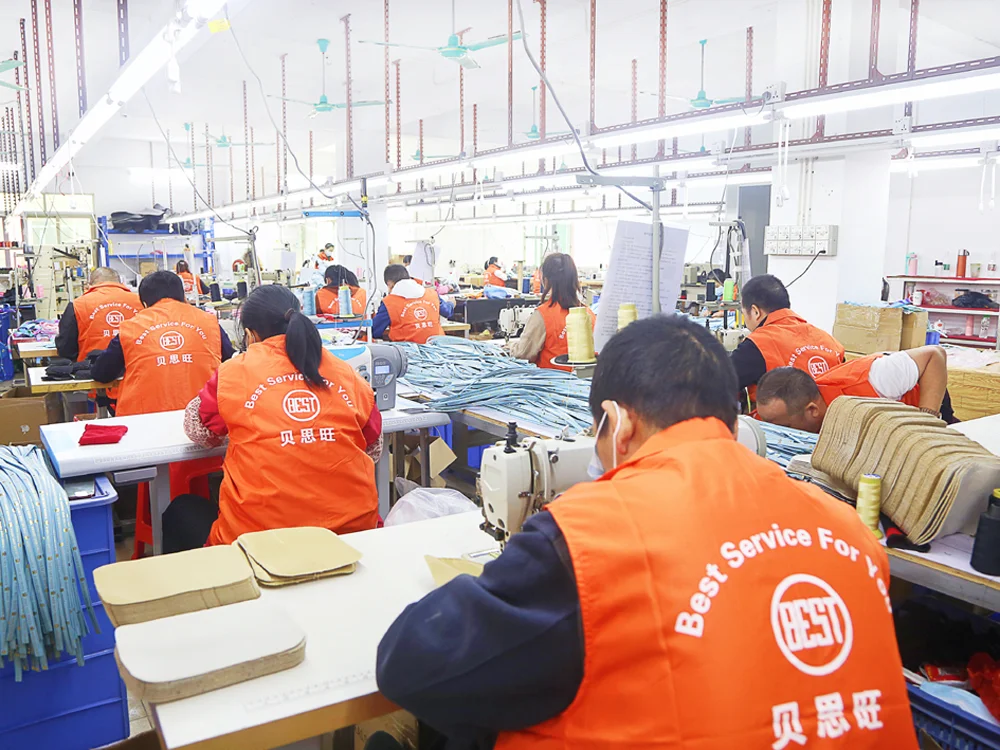
An approved dog harness sample provides an important physical reference, but the sample alone is not enough to control bulk production.
To reduce misunderstandings, keep the final approved sample and turn its important details into written production and inspection requirements.
This includes:
- Measurements
- Materials
- Webbing
- Color
- Hardware
- Stitching
- Logo
- Packaging
Here is a simple step-by-step process buyers can follow before approving dog harness bulk production.
The Short Answer
To keep bulk dog harnesses consistent with the approved sample:
- Keep the final approved sample.
- Write down every important product requirement.
- Record any changes made after sample approval.
- Transfer the requirements to purchasing, production and QC.
- Check production units against both the sample and written documents.
The approved sample shows the expected finished product.
The specification sheet, production order and QC instructions explain how the factory should reproduce and inspect it.
You need both.
Step 1: Keep the Final Approved Sample
The final approved sample should be kept as the physical production reference.
It helps the factory check:
- Overall shape
- Material appearance
- Product construction
- Color combination
- Hardware appearance
- Stitching effect
- Logo position
- Packaging presentation
But a sample cannot explain every requirement by itself.
For example, someone looking at the sample may not know:
- Where to measure the neck opening
- What the maximum belly adjustment should be
- What webbing width was approved
- Which hardware size should be used
- Whether the reinforcement stitching should be X-shaped or box-shaped
That information needs to be written down.
Step 2: Lock the Important Product Details
Before bulk production, the buyer and supplier should confirm the following eight areas.
1. Dimensions
Confirm:
- Measurement points
- Neck adjustment range
- Belly adjustment range
- Size chart
- Agreed tolerances
Everyone should use the same measurement method. If the buyer measures the harness in one way and the factory measures it in another way, the results may not be comparable.
2. Materials
Confirm:
- Outer material
- Lining material
- Material construction
- Material reference or supplier code
- Thickness requirements, if important
Avoid descriptions such as “use thick mesh” or “use the same fabric.” They are too easy to interpret differently.
If thickness is commercially important, use an approved material reference or an agreed measurement method.
ASTM D1777-26 is a test method for measuring textile thickness. It also explains that the measured thickness of many textiles can change according to the pressure used during measurement.
This does not mean every Bestone order is tested according to ASTM D1777-26. It shows why an important thickness requirement needs a clear reference or measurement method.
3. Webbing
Confirm:
- Webbing material
- Width
- Thickness or construction
- Color
- Placement
Do not assume that webbing with the same color will also have the same width, thickness or hand feel.
4. Color
Confirm:
- Approved color reference
- Which materials and components must match
- How the color will be compared
- Whether slight differences between different materials are acceptable
Fabric, webbing, plastic buckles and metal hardware may not show color in exactly the same way. The buyer and supplier should agree on the reference used for approval.
5. Hardware
Confirm:
- Buckle style
- Adjuster style
- D-ring or O-ring style
- Size
- Material
- Finish
- Color
- Position on the harness
A written hardware list is more reliable than asking the production team to identify every component by looking at the sample.
6. Stitching
Confirm:
- Stitching location
- Reinforcement location
- Reinforcement shape
- Thread color
- Any special construction requirements
For example, do not write only:
Reinforced stitching required.
Write whether the reinforcement should be:
- X-shaped
- Box-shaped
- Box-X shaped
- Another approved pattern
ASTM D6193-16(2025) explains that seam construction involves several variables, including seam type, stitch type, stitch density, thread tension and thread strength.
This does not mean every Bestone harness is produced or tested according to ASTM D6193. It supports a simple point: important sewing details should be clearly defined.
7. Logo
Confirm:
- Logo method
- Artwork
- Color
- Size
- Position
- Sewing or application method
The production file should show where the logo starts, where it ends and how it should be aligned.
8. Packaging
Confirm whether the order uses:
- Standard packaging
- Reduced packaging
- Package-free presentation
- Custom polybags
- Hangtags
- Inserts
- Barcode labels
- Other customer-specific packaging
Packaging should be included in the production requirements instead of being decided only when the products are ready to ship.
Step 3: Use the Right Documents
Different production references have different jobs.
| Reference | What it controls |
|---|---|
| Approved sample | Overall appearance, construction and hand feel |
| Specification sheet | Dimensions, materials, components and construction |
| Production order | Confirmed order and production requirements |
| QC instructions | Items that inspectors need to check |
| Artwork files | Logo, label and print requirements |
| Packaging files | Packaging, barcode, insert and hangtag requirements |
The approved sample should not replace these documents. The documents should not replace the approved sample either.
The factory should use them together.
The ISO 9000 family includes customer focus and a process-oriented approach among its quality-management principles.
For buyers, the practical point is simple: approved requirements should be transferred through a process that purchasing, production and QC teams can follow.
This reference explains a general quality-management principle. It does not mean that Bestone holds ISO certification.
Step 4: Decide Whether You Need Another Pre-Production Sample
You may not need another complete sample after every small change.
For example, a clearly documented thread-color or packaging change may not require a new sample.
However, buyers should consider requesting another pre-production sample when changes affect:
- Harness pattern
- Overall fit
- Neck or belly adjustment range
- Main materials
- Webbing construction
- Buckles or metal hardware
- Stitching structure
- Reinforcement position
- Logo application method
- Several connected specifications at the same time
Ask this question:
If the change is reproduced incorrectly across the full order, would we reject, rework or discount the products?
If the answer is yes, another sample or approval step may be worth the extra time.
If a new sample is not required, the remaining changes should still be added to the specification or production order. Do not leave them only in email or chat messages.
Step 5: Transfer the Requirements to Production and QC
Once the sample is approved, the confirmed requirements need to reach every relevant team.
Depending on the project, this may include:
- Purchasing
- Material suppliers
- Pattern-making
- Cutting
- Sewing
- Logo processing
- Assembly
- Packaging
- Quality control
A standard production order may be enough for a simple product.
For a more complex dog harness, the factory may also need:
- A separate specification sheet
- Measurement diagrams
- Hardware details
- Artwork files
- Packaging instructions
- QC requirements
The goal is not to create more paperwork. The goal is to prevent important requirements from being lost between sample approval and production.
Step 6: Check During Production
Do not wait until the products are packed before checking important requirements.
During production, the factory can check:
- Measurements
- Materials
- Webbing
- Color
- Hardware
- Stitching
- Logo
- Packaging
The exact checking method and frequency should depend on the product, order and agreed inspection plan.
Step 7: Compare the Final Products With All Approved References
At final inspection, place the retained sample together with the written documents.
Compare the checked production units against:
- The retained approved sample
- The specification sheet
- The production order
- The QC instructions
- The approved artwork
- The packaging requirements
This is more reliable than asking whether the bulk products simply “look similar” to the sample.
What About AQL Inspection?
ISO 2859-1:2026 describes sampling plans indexed by acceptance quality limit, commonly called AQL, for lot-by-lot inspection.
AQL sampling can help determine how many units are inspected and how a production lot is evaluated.
However, an AQL plan does not define the product requirements.
Before using an inspection plan, the buyer and supplier still need to agree on:
- What will be inspected
- What counts as a defect
- How defects are classified
- Which inspection level applies
- Which acceptance criteria will be used
This does not mean Bestone applies ISO 2859-1:2026 or the same AQL level to every order. The inspection method should be confirmed for each product and purchase order.
A Real Bestone Dog Harness Example
In one anonymized pullover vest harness project, Bestone retained the final approved sample.
The confirmed requirements included:
- Maximum neck adjustment
- Maximum belly adjustment
- Material thickness
- Lining material
- Webbing width
- Custom color
- Hardware style, color and size
- Reinforcement stitching
- Thread color
- Logo type, color, size and position
- Packaging method
The requirements were transferred into the production order.
For a complex style or an order with additional requirements, Bestone may also prepare a separate specification file and QC instructions.
During final inspection, the checked production units were compared with:
- The retained approved sample
- The specification sheet
- The production order
For this order, the bulk units checked during final inspection matched the retained sample and documented requirements for the reviewed items.
This does not mean that every unit in every order will always be completely identical.
It shows how a retained sample and written requirements can work together to make production and inspection clearer.
Switching Dog Harness Suppliers? Prepare These Files
If you are moving an existing dog harness to a new supplier, do not send only a sample or a few product photos.
Prepare as much of the following information as possible:
- Approved sample or detailed photographs
- Tech pack or specification sheet
- Measurement diagram
- Size chart
- Neck and belly adjustment ranges
- Material information
- Webbing specifications
- Hardware list
- Stitching requirements
- Logo artwork
- Label and hangtag files
- Packaging instructions
- Approved color references
- Known production concerns
- Inspection requirements
If some documents are missing, identify the gaps during the sampling stage.
It is better to rebuild the missing specifications before production than to ask the new supplier to guess every detail from a finished sample.
You can also review Bestone’s:
Upload Specs for a Supplier-Switch Review
Upload your specification sheet, size chart, material and hardware requirements, product photographs, and current production concerns.
Bestone will use the information for an initial specification-gap review covering:
- Missing product details
- Questions for the next sampling stage
- Proposed quality-control checkpoints
The final development and inspection plan will depend on your product and order requirements.
Frequently Asked Questions
Is an approved sample enough for bulk production?
No. The approved sample is an important physical reference, but important details should also be recorded in the specification sheet, production order and QC instructions.
Should the factory keep the approved sample?
Yes. Keeping the final approved sample gives the production and QC teams a physical reference for appearance, construction and hand feel.
Does every small change require another sample?
Not always. A small, clearly documented change may not require another complete sample. A new sample is more important when the change affects fit, pattern, materials, hardware, stitching structure or several connected specifications.
Can AQL inspection guarantee that every unit is correct?
No. AQL is a sampling method. It does not mean that every unit is inspected, and it does not replace clear product specifications.
What should I send when changing dog harness manufacturers?
Send the approved sample or photographs, specifications, size chart, material details, hardware list, artwork, packaging instructions and any known production concerns.
Key Takeaways
- Keep the final approved sample.
- Turn important sample details into written requirements.
- Lock dimensions, materials, webbing, color, hardware, stitching, logo and packaging.
- Record every approved change.
- Use the sample, specification sheet, production order and QC instructions together.
- Request another sample when a change creates meaningful production risk.
- Check important requirements during production, not only after packing.
- Compare final products with both the retained sample and written documents.
- Do not rely on AQL sampling to replace clear product specifications.
- Rebuild missing product information before changing suppliers.
Upload Specs for a Supplier-Switch Review
Send Bestone your dog harness specifications, size chart, approved-sample information and current production concerns.
You will receive an initial review identifying missing specification details, sampling questions and proposed QC checkpoints for further discussion.
Author: Jessica Liu, Founder, Bestone Pet Products Manufacturer
Technical reviewer: Bill Wu, President, Bestone Pet Products Manufacturer
Creation method: Based on Bestone’s first-hand dog harness production workflow and an anonymized project example, supported by primary technical sources and drafted with AI assistance.
Last reviewed: August 24, 2026
Sources
-
International Organization for Standardization.
ISO 9000 family — Quality management.
Accessed August 24, 2026. Used for general quality-management principles. It does not establish that Bestone holds ISO certification. -
International Organization for Standardization.
ISO 2859-1:2026, Edition 3 — Sampling procedures for inspection by attributes.
Published January 2026; accessed August 24, 2026. Used to explain AQL-indexed acceptance sampling. It does not establish the inspection plan used for every Bestone order. -
ASTM International.
ASTM D1777-26 — Standard Test Method for Thickness of Textile Materials.
Accessed August 24, 2026. Used to explain why textile-thickness requirements need a defined reference or measurement method. -
ASTM International.
ASTM D6193-16(2025) — Standard Practice for Stitches and Seams.
Last updated November 10, 2025; accessed August 24, 2026. Used to explain the variables involved in seam and stitch construction. -
Bestone first-party evidence.
An anonymized pullover vest dog harness production-control example supplied by Jessica Liu and reviewed by Bill Wu. The example does not represent every Bestone order.

 English
  العربية
  Dansk
Dansk  Nederlands
  Français
  Italiano
  한국어
한국어  Norsk bokmål
  Português
  Русский
  Српски језик
  Español
  Svenska
  日本語
日本語  Deutsch