Skip to content

Hi there! I’m Jessica, the founder of Bestone. With 16 years of experience manufacturing pet products for brands around the world, I’ve seen exactly what works and what doesn’t. Today, I’m sharing the blueprint on how to launch a successful dog harness brand by partnering with the right factory.
🚀 The Harness Brand Launch Roadmap
If you want to build a successful pet brand, follow these 7 essential steps to get from idea to launch.
| Step | Action Item | Why It Matters |
|---|---|---|
| 1. Niche Down | Choose a specific target (e.g., Bulldogs, Hikers). | Avoids competing with giants like Amazon Basics. |
| 2. Select Model | Decide between Private Label or Custom Design. | Determines your startup cost and timeline. |
| 3. Vet Factory | Verify 5+ years of experience & certifications. | Prevents quality issues and safety risks. |
| 4. Prototype | Order samples to test fit and materials. | Ensures the product works on real dogs. |
| 5. QA Testing | Perform pull-tests (tensile strength). | Protects your brand from liability. |
| 6. Pricing | Set prices with 60-70% gross margin. | Ensures you have budget for marketing. |
| 7. Launch | Start with one hero product and gather reviews. | Validates the market before scaling up. |
Why the Dog Harness Market is a Multi-Billion Dollar Opportunity
You might be wondering, “Is there still room for a new dog harness brand?” The answer is a resounding yes. The market is not just growing; it is evolving. We are seeing a massive shift in how people view their pets.
Owners no longer just want a rope to tie their dog up. They want safety, style, and comfort. According to recent data, the pet accessory market is exploding because people treat their dogs like children. This trend, often called “pet humanization,” drives spending on premium products.
Industry Insight: “The global dog harness market is flourishing due to increasing pet ownership across the globe, along with a rising focus on dog comfort, safety, and overall wellbeing.” (Markets and Data, Dog Harness Market Assessment, 2024–2031)
Because of this, specific niches are wide open. If you can provide a high-quality product that solves a specific problem, you can build a profitable business. For a deeper look at where the industry is heading, check out our guide on dog apparel trends for 2025.
Step 1: Don’t Sell to Everyone (Finding Your Niche)
The biggest mistake new entrepreneurs make is trying to sell a “general” harness to everyone. If you try to sell to everyone, you end up selling to no one. To succeed, you must find a gap in the market.
Why Generalist Brands Fail
Big retailers already dominate the cheap, generic harness market. You cannot compete with them on price. Instead, you must compete on value and specialization. Think about what is missing in the current market.
The 5 Profitable Gaps
Here are five areas where we still see high demand but limited supply:
- Breed-Specific: Harnesses designed specifically for difficult-to-fit breeds like Dachshunds or Bulldogs.
- Eco-Friendly: Products made from rPET or organic cotton for sustainable buyers.
- Budget-Friendly: High durability at an affordable entry price.
- Small Breed Specialist: Gear for dogs under 10lbs, like the most wanted small dogs.
- Senior Support: Harnesses with extra padding and lift support for aging dogs.
“These groups demonstrate a strong inclination toward innovative and aesthetically appealing products, often driven by trends in sustainability and digital technology.” — Grand View Research, Pet Accessories Market, 2024.
Step 2: Choosing Your Manufacturing Path
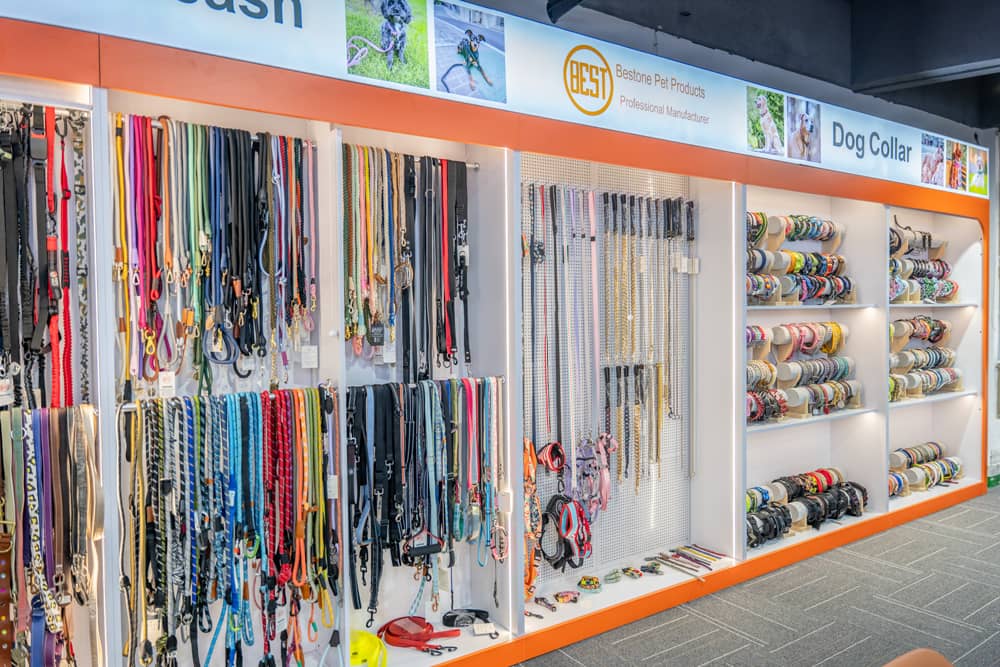

Once you have your niche, you need to decide how to make the product. There are three main paths, and your choice depends on your budget and timeline.
Private Label vs. White Label vs. Custom
Private Label means you take an existing product design from a factory and put your logo on it. This is fast and affordable. It is great for testing the market.
White Label is similar but often refers to very generic products with minimal branding. This is the cheapest option but offers the least brand loyalty.
Custom Manufacturing (ODM/OEM) is where you create a unique design from scratch. This takes longer but creates a defensible brand. At Bestone, we specialize in helping brands transition from private label to custom designs as they grow.
My Recommendation: Start with a high-quality Private Label or White Label product to validate your idea. Once you have sales, invest in custom designs to stand out.
Step 3: How to Find and Vet a Reliable Factory Partner
Your factory is your business partner. If they fail, you fail. Finding a reliable pet product supplier is critical.
The Vetting Checklist
Before you send any money, ask these questions:
- Experience: Do they have at least 10 years of experience? (We have 16!).
- Expertise: Do they understand dog anatomy? A harness isn’t just fabric; it’s safety gear.
- Communication: Do they reply within 24 hours? Are they proactive?
- End-to-End Support: Can they handle packaging and logistics?
Pro Tip: Private label harness buyers increasingly expect factories to provide end‑to‑end support—material sourcing, design, sampling, compliance documentation, packaging, and logistics—to shorten time‑to‑market and free internal teams to focus on branding and channel strategy.
Red Flags to Watch For
Be careful if a factory offers prices that seem too good to be true. They might be using cheap, breakable buckles or toxic materials. Also, avoid factories that are secretive about their production process. Transparency is key. You can read more about top manufacturers in China to compare options.
Step 4: Quality Control—The “Sleep Well at Night” Factor
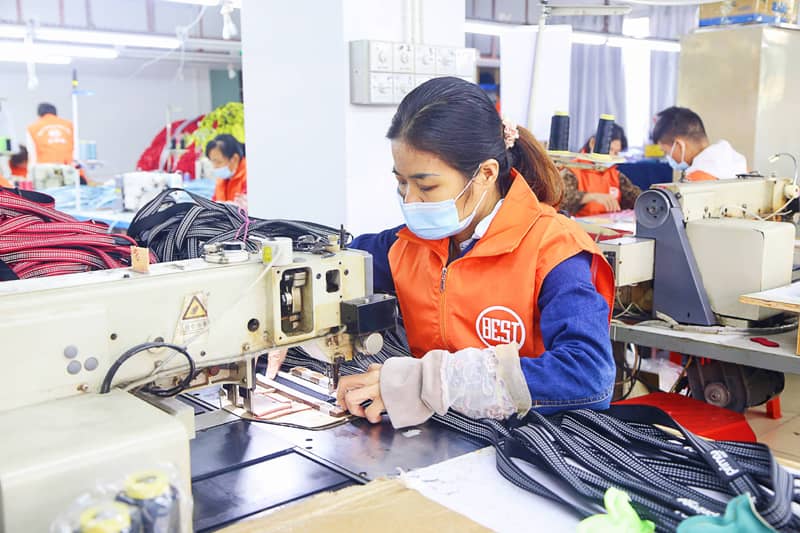

Imagine a customer is walking their dog near a busy road. The dog pulls, and the harness snaps. This is a nightmare scenario. Quality control is not optional; it is essential.
Safety First: The 7x Rule
A good harness must withstand a pulling force equal to at least 7 times the dog’s weight. Ask your factory for “tensile strength” test reports. We perform these tests on every batch to ensure dog harnesses are safe.
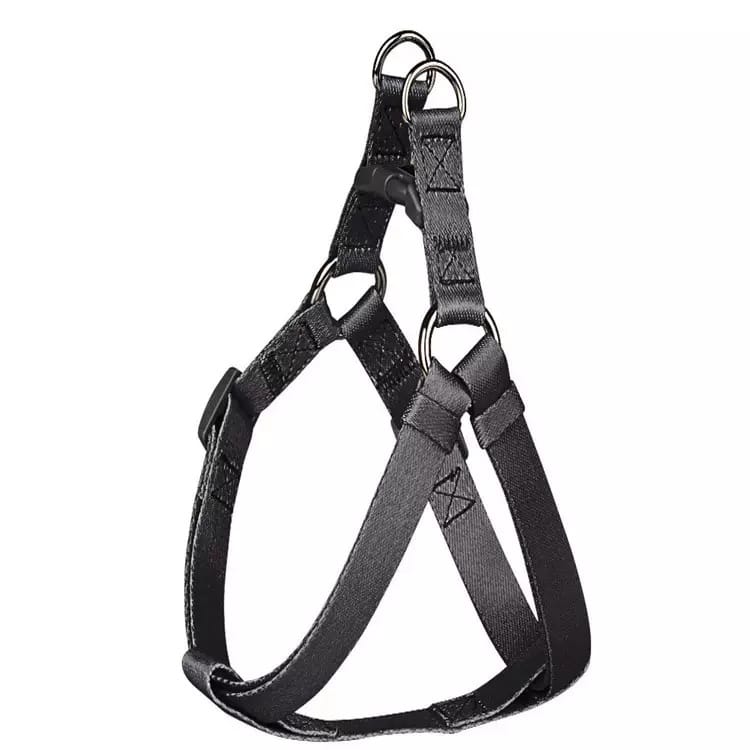
Step 5: Designing for Success (Materials & Sizing)
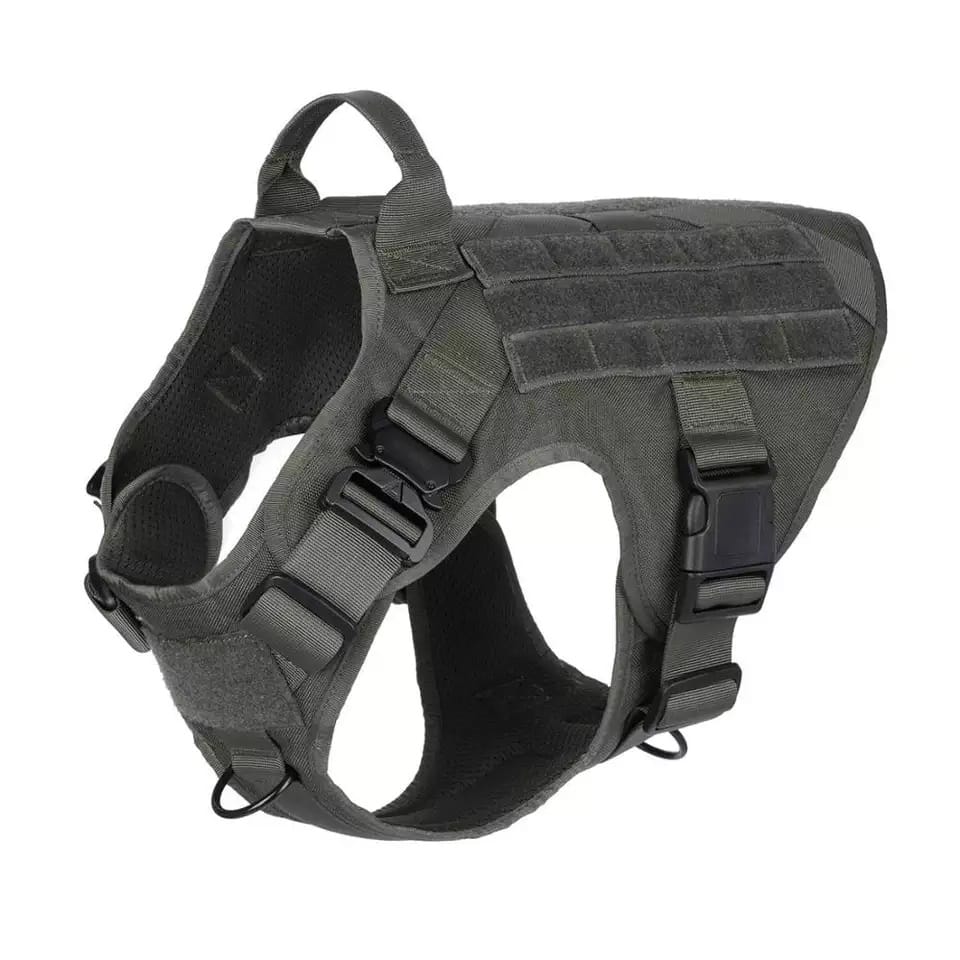
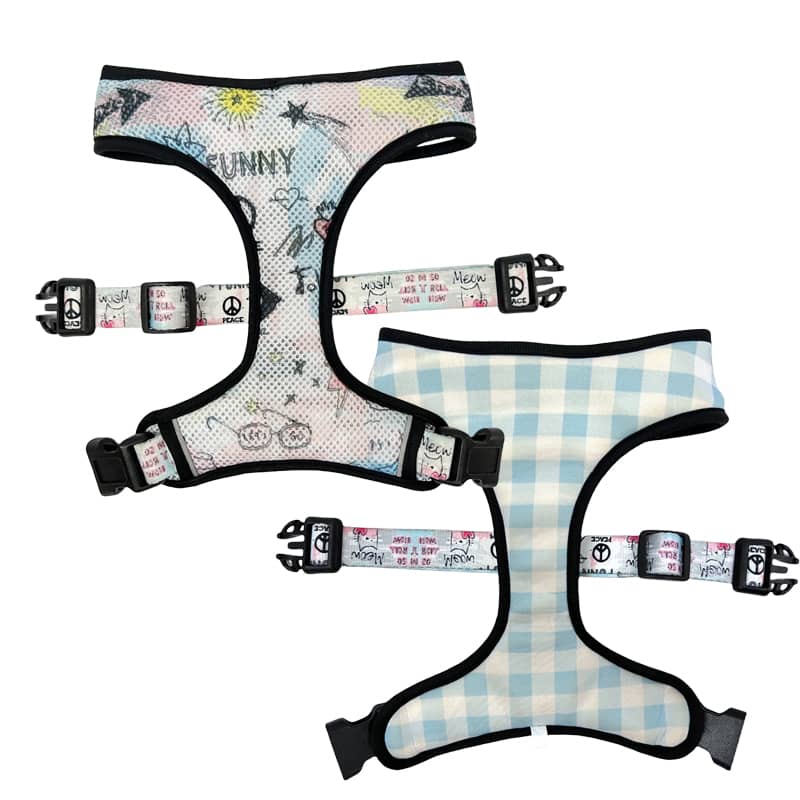
The two biggest reasons for product returns are “it looks cheap” and “it doesn’t fit.” You can solve both with the right design choices.
Material Selection
The material defines the product’s feel.
- Nylon: Durable and cheap, but can be rough.
- Neoprene: Soft and padded. This is why neoprene harnesses are top sellers.
- Mesh: Breathable, great for summer.
- Eco-Materials: Recycled plastic (rPET) is trending. Learn more about sustainable pet supplies here.
The Sizing Challenge
Sizing is tricky. A “Medium” for a Pug is different from a “Medium” for a Border Collie. Use the “Two-Finger Rule” in your design: customers should be able to fit two fingers under the straps. Provide a clear measurement guide on your packaging to reduce returns.
Step 6: The Business Side (Pricing, Margins & MOQs)
You have a great product, but can you make money? Let’s talk about the numbers.
Pricing Strategy
You need a healthy margin to survive. Aim for a gross margin of 60% to 70%. If your product costs $10 to make and ship, you should sell it for at least $30 to $35. This gives you room to pay for ads and cover returns. Check out our article on whether selling dog accessories is profitable for a deeper dive.
Managing MOQs (Minimum Order Quantities)
Factories have MOQs to cover setup costs. However, you can negotiate. Ask to split the MOQ across different sizes (e.g., 100 Small, 200 Medium, 100 Large) or colors. This helps you manage inventory without tying up all your cash.
Frequently Asked Questions
How long does it take to launch a brand?
Generally, it takes about 3 to 4 months. This includes 1 month for sampling and 2 months for production and shipping. If you choose a custom manufacturing route, add another month for design.
Should I start with a collar or a harness?
Harnesses are growing faster, but collars are essential. Many brands launch a matching set. Read about the dog harness vs. collar debate to decide what fits your niche.
Do I need to visit the factory in China?
Not necessarily. While a visit is great, you can use video calls and hire third-party inspectors to check your goods before they ship.
Conclusion: Your Path to a Profitable Brand
Launching a private label dog harness brand is a journey, but it is one of the most rewarding paths in the pet industry. The market is growing, and dog owners are hungry for high-quality, safe, and stylish gear.
Remember, success comes from three things: picking the right niche, ensuring safety through quality control, and partnering with a manufacturer who cares about your brand as much as you do.
At Bestone, we have spent 16 years helping entrepreneurs like you turn sketches into best-selling products. If you are ready to start your journey with a partner you can trust, we are here to help.
Start Your Project With Bestone Today